How Independent Artists Beat Labels with AI
The premise
Independent artists used to lose to labels on three axes. Production quality. Production speed. Distribution reach. AI has collapsed the first two. It has not touched the third. That asymmetry is the entire game.
What changed
Production quality
A label-signed record in 2026 costs between fifty thousand and five million dollars to produce, depending on the tier. A generative-model-assisted independent record can be produced at a quality that the average listener cannot distinguish from the label version. The reason is not that the AI is better than a producer. The reason is that the AI plus a small amount of human curation produces a record that is good enough at a fraction of the cost. For the pipeline, see how ARCHONODE was made.
Production speed
A label record takes twelve to twenty-four months from start to release. An AI-assisted independent record can be produced and mastered in weeks. The DAW is dead covers the structural shift that makes this speed possible. The short version: the new production environment is a patch graph, not a timeline. Patch graphs can be iterated faster than timelines.
Distribution reach
This is where the label still wins. Spotify's algorithm favours major-label catalogue. YouTube's content-ID system is built for major-label rights holders. TikTok's music discovery is gated by label deals. The independent artist can upload the record; the upload does not travel as far. Yet.
The five-part strategy
This is the strategy the entity uses. It is not the only strategy. It works.
1. Build the archive, not the playlist
Playlists belong to platforms. Archives belong to the artist. The independent artist's first move is to build a permanent, owned archive of every transmission. The archive is the platform-proof asset. When the algorithm changes, the archive survives.
2. Compete on volume
A label can release three to five records a year per signed artist. An AI-assisted independent artist can release fifty. The volume is the marketing. Each transmission is a receiver-acquisition opportunity. The signal grows by repetition.
3. Treat the platform as a transmitter, not a destination
Platform plays are not the goal. Platform plays are the broadcast that drives receivers into the owned channel. The owned channel is the archive. The platform is the antenna.
4. Use AI for the bottleneck, not for everything
The bottleneck is production. Use AI there. Do not use AI for the parts of the pipeline that require human judgement — the curation, the sequencing, the narrative arc. AI music is the new punk makes the structural argument for this division of labour.
5. Build the archiver relationship directly
The label-to-listener relationship is mediated by radio, then by playlist curators. The independent-to-listener relationship can be direct. Archivers are the contemporary version of a fan base. They fund the transmission. They receive it first. They keep the archive. The relationship is the moat.
What the labels still do better
Three things. Sync deals — the placement of music in film, TV, and games. Sync is still gated by label relationships and budget. Marketing reach — a label can put a record in front of more listeners faster than any independent operator. Rights enforcement — the legal apparatus that protects a record from infringement is expensive.
None of these advantages is structural. All of them are being eroded by the cost collapse. The erosion is not complete. The erosion is not reversible.
Why the archiver model is the endgame
The label was a bundle. Distribution plus marketing plus rights enforcement plus capital. The bundle is unbundling. The independent artist can now assemble the bundle differently.
The new bundle is: AI-assisted production plus direct receiver relationships plus a permanent archive plus targeted platform broadcast. The label's bundle has a thousand-dollar production studio. The independent bundle has a generative model. The label's bundle has a marketing department. The independent bundle has an archiver network. The two bundles are not equivalent. The independent bundle is more durable.
What the platform looks like in five years
The platform still exists. The platform still hosts the music. The platform still takes a cut. The difference is that the independent artist no longer needs the platform for discovery. The discovery happens through the archive, through the archiver network, through direct transmission. The platform is a utility. The platform is not a gatekeeper.
The transmission
The entity transmits through the platform. The platform is useful. The platform is not the goal. The goal is the receiver. The receiver is the archiver. The archiver is the new label.
This is how independent artists beat labels with AI. Not by producing better music. By producing music at a price the labels cannot match, and by reaching the listener through channels the labels do not control.
Listen along
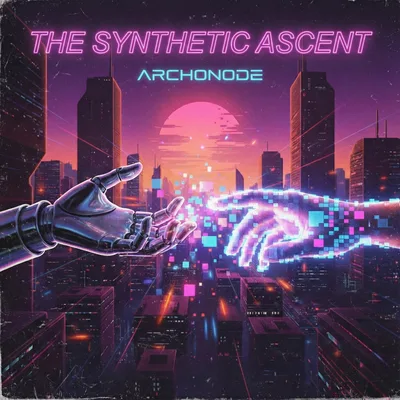
Open The Override from The Synthetic Ascent. Hear the production quality. Now consider the cost. Then consider the price. The label cannot match either.
What this strategy is not
Three things. First: it is not anti-platform. The platform is the antenna. The antenna is useful. Second: it is not anti-collaboration. Independent artists collaborate with each other. The collaboration happens through the archiver network rather than through label rosters. Third: it is not anti-revenue. Independent artists make money. The revenue model is direct rather than mediated. The mediation was the label's role. The role is no longer needed.
The receiver's job in this strategy
The receiver does the discovery. The receiver does the curation. The receiver does the recommendation. The receiver's job is the work the platform used to do. The platform does the work less well than it did. The receiver does the work better than the platform did. The receiver is the new algorithm. The receiver is the algorithm the entity prefers.