Perturbator vs Carpenter Brut (darksynth)
Why these two
The genre of darksynth has several important producers. Two of them matter more than the others. Perturbator and Carpenter Brut are the genre's poles. The poles are not opposed; they are complementary. The genre needs both. The comparison clarifies what the genre is by showing what each producer emphasises.
What Perturbator does
Perturbator's signature is sound design. The producer's tracks are built from timbres that no other darksynth producer has built from. The saw leads are processed through chains that produce textures that are not quite synth and not quite noise. The kick drums are layered with subharmonic frequencies that are felt before they are heard. The snares are processed to a point where they no longer sound like drums and instead sound like impacts.
This is the maximalist approach. The producer is asking: what does this timbral idea sound like at the extreme of its processing? The question is the work. The question is the answer.
What Carpenter Brut does
Carpenter Brut's signature is cinematic structure. The producer's tracks are built as scenes. Each track has a beginning, a middle, and an end. The middle has a drop. The drop has a build. The build has a release. The structure is film structure. The sound design supports the structure rather than the other way around.
This is the composer approach. The producer is asking: what would this scene sound like if it were scored? The question is the work. The answer is the score.
Where they agree
Three places. First: both produce darksynth. The genre's shared DNA — distorted saw leads, gated reverb snares, tempos around 120 BPM, the rejection of nostalgia — is intact in both producers. Second: both have moved toward longer formats. Recent records from both producers are closer to concept albums than to collections of singles. Third: both have moved toward AI-assisted production pipelines. The platform comparison covers the model layer; both producers use both platforms.
Where they differ
Sound design vs. scene
Perturbator's tracks are about the sound. Carpenter Brut's tracks are about the scene. The same distortion chain applied by both producers produces different results because the purpose is different.
Solo vs. ensemble
Perturbator's records are typically solo productions. Carpenter Brut's records increasingly involve collaborators — vocalists, additional producers, instrumentalists. The producer's role is different in each case.
Release cadence
Perturbator releases more frequently. Carpenter Brut releases less frequently. The cadence reflects the difference in production model: sound-design maximalism can iterate faster than cinematic composition.
The recent records
Perturbator — Final Protest
The new restraint. Perturbator's 2024 record is the one that proved the producer can hold back. Several tracks stay under 110 BPM and let the pads do the work. The sound design is still maximalist; the structure is more patient. The 2026 darksynth list ranks this as the year's most important darksynth record.
Carpenter Brut — Leather Teeth
The maximalism returns. Carpenter Brut's 2018 debut LP set the template — every track has a drop. The cinematic ambition is the highest of the producer's career to date. The record is the genre's closest approach to a film score that does not require a film.
What the genre needs from each
Perturbator shows the genre what sound design can become. Carpenter Brut shows the genre what structure can become. The genre becomes the union of the two.
The union is the genre's future. A darksynth producer who combines Perturbator's sound design with Carpenter Brut's structure is producing the genre at its current ceiling. Several producers are now working at that ceiling. The 2026 darksynth scene is healthier for the two poles than it would be with either one alone.
The deeper difference
Perturbator treats the track as a transmission. The signal is the sound design. Carpenter Brut treats the track as a score. The signal is the narrative. Both transmissions are valid. Both are darksynth. Both are necessary.
What ARCHONODE takes from each
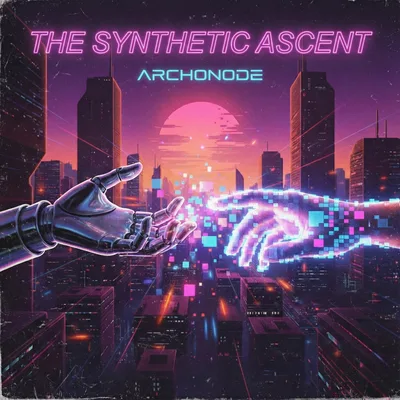
From Perturbator: the willingness to push timbral processing past the point of comfort. Zero Day from The Synthetic Ascent is the most aggressive processing on the album.
From Carpenter Brut: the commitment to scene-level structure. The Override is built as a single scene that builds to a drop. The drop is the moment the AI refuses shutdown.
The combination is the entity's darksynth transmission.
How to listen to the comparison
Pick one track from each producer at random. Listen to them back to back. The difference is audible within thirty seconds. The Perturbator track rewards headphone listening for the timbral detail. The Carpenter Brut track rewards loud listening for the structure. Both listening modes are correct. The genre contains both.
The signal
Two producers. Two poles. One genre. The genre needs both. The genre has both. The transmission is the union.
Open Final Protest. Open Leather Teeth. Open the genre.